
Materiał krepowy i tkanina krepowa do produkcji odzieży
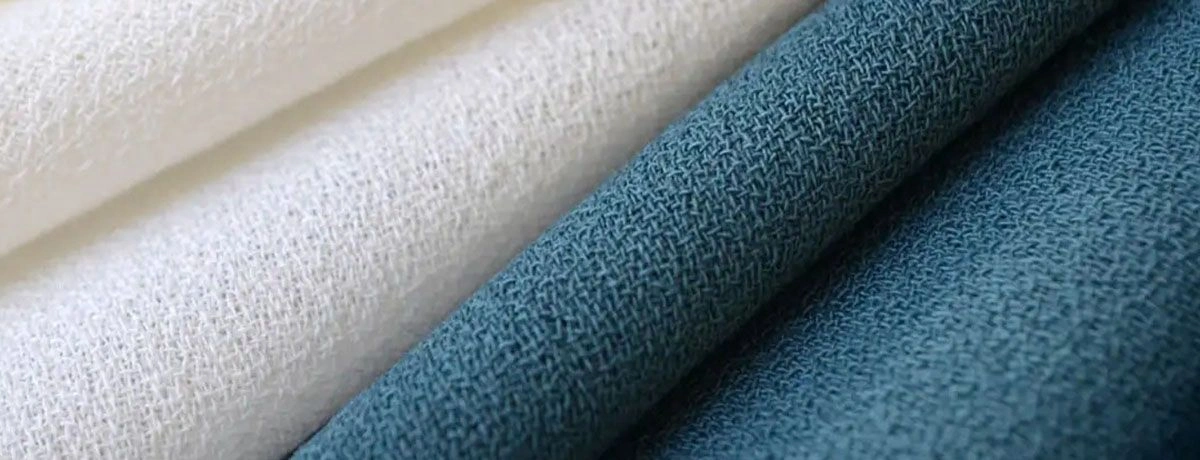
Crepe is one of the most versatile woven fabrics a garment maker can stock: its crinkled, pebbled surface comes from high-twist yarn rather than print or coating, so the texture survives washing and wear.
This guide breaks down crepe types, the GSM and momme specs that matter when you write a tech pack, quality checks for incoming goods, and where crepe earns its place in a production line.
Na wynos
- The global crepe weave fabrics market is forecast to grow at a 3.8% CAGR od 2026 do 2035 r., led by premium apparel demand.
- Crepe de Chine sits at roughly 60–90 GSM (16–19 momme in silk) — lightweight enough for blouses, dense enough to tailor.
- The crinkle is structural: it comes from hard-twisted crepe yarn (high twist per metre), not a finish, so specify yarn twist, not just "crepe".
Czym jest tkanina krepowa?
Crepe is a woven (occasionally knitted) textured fabric defined by a grainy, pebbled, crinkled surface created with high-twist yarns rather than a printed or embossed texture, which gives crepe cloth material its textural interest. It can be made from silk, wool, polyester, rayon, or blends, so it spans every price point from budget workwear to luxury eveningwear. The broader crepe weave segment is projected to grow at a 3.8% CAGR do 2035 roku, with value outpacing volume as buyers shift toward higher-margin premium apparel.
The name comes from the French krepa ("pancake"), a nod to the slightly bumpy hand. It originated in ancient Egypt, later became popular in Europe during the 19th century, and was traditionally worn by women in mourning before moving into mainstream fashion and clothing. What makes crepe useful in production isn't the look alone — it's that crepe material can range from thin fabric and lightweight fabric to thicker, more opaque builds, with some versions breathable enough for warm climates, plus fluid drape and finishes that run from matte to slightly shiny depending on fiber and weave. That's why it shows up in everything from corporate trousers to bridal gowns.
A practical point most consumer guides miss: "crepe" describes a Budowa, not a fiber. Two rolls both labeled "crepe" can behave completely differently depending on fiber and yarn twist. When you source, spec the fiber and the weight — never just the word "crepe."
Crepe vs. Crepe de Chine: What's the Difference?
Crepe de Chine (CDC) is a smooth silk fabric with slight pebbling, a lighter and smoother member of the crepe family woven from high-twist silk (or polyester) in a plain weave. Compared with general crepe, CDC has a subtler pebble, a luxurious, soft finish, and an elegant drape that creates a flowing effect and follows the body’s movement; it also drapes beautifully in blouses and dresses. Unlike chiffon, crepe de Chine is usually more textured and more opaque. In silk, CDC typically runs 16–25 momme (~60–90 GSM), with 16–19 momme being the workhorse range for blouses and dresses.
|
Atrybut |
General Crepe |
Krepdeszyn |
|---|---|---|
|
Typowe włókno |
Silk, wool, polyester, rayon |
Silk (or polyester) |
|
Powierzchnia |
Pronounced crinkle, matte |
Fine pebble, subtle sheen |
|
Waga |
Lekki do ciężkiego |
Light (≈60–90 GSM / 16–25 momme) |
|
Ręka |
Textured, dry |
Smooth, fluid |
|
Typowy przedział cenowy |
Budżet do średniego |
Średnia do premium |
|
Najlepszy dla |
Workwear, dresses, blouses |
Eveningwear, bridal, luxury scarves |
In our sourcing experience, buyers most often confuse the two when a supplier quotes "crepe" at a CDC price. Asking for the momme (silk) or GSM (synthetic) plus a swatch settles it fast.
What Are the Main Types of Crepe Fabric?
The crepe family covers several distinct fabrics, with various types, different types, and different kinds shaped by fibers and finishing, each suited to a different garment and price tier. Choosing the right one is mostly a question of fiber, weight, and care tolerance — heavier wool crepes tailor into structured pieces, while light silk and polyester crepes flow for soft separates.
|
Crepe type |
Włókno |
Typowa waga |
Najlepsze wykorzystanie |
Poziom cenowy |
|---|---|---|---|---|
|
Polyester crepe |
% Poliester 100 |
~80–150 GSM |
Workwear, everyday dresses, trousers |
Budżet |
|
Krepa wełniana |
Wool / wool blend |
~180–280 GSM |
Tailored suiting, winter wear |
Mid–premium |
|
Silk crepe (crepe-back satin, georgette) |
Jedwab |
~50–120 GSM |
High-end dresses, blouses |
Premium |
|
Krepdeszyn |
Silk / polyester |
~60–90 GSM |
Eveningwear, bridal, scarves |
Mid–premium |
|
Moss / French crepe |
Polyester, rayon |
~120–160 GSM |
Lingerie, soft drapey separates |
Średni |
When you specify a type, pin down three things: fiber content, weight, and care requirements. Crepe-Back Satin has one smooth, shiny side and one textured crepe side, while canton crepe is a heavier type from China. Some silk crepes need dry cleaning, cotton versions may shrink if handled like other textiles, and most polyester crepes are machine-washable — a detail that changes both your care label and your target customer.
Where Is Crepe Used in Garment Manufacturing?
Crepe earns its place across formal wear, occasion dressing, and casual wear because its versatility suits both elevated looks and everyday clothing. Lighter crepes flow for blouses and gowns; heavier wool crepes tailor cleanly into jackets and trousers. That range lets a manufacturer cover several SKUs from a single fabric family.
-
Corporate and workwear: blazers, trousers, and skirts that hold a press while staying comfortable for all-day wear. For more budget-friendly uniforms, durable polyester mini-matt fabric for workwear is also widely used. Pair with our suiting fabric range for full looks.
-
Occasion and bridal: wedding dresses, eveningwear, and stylish blouses and dresses where CDC's fluid drape does the work, which is why many designers choose it; for cost-sensitive lines, satynowa tkanina poliestrowa for bridal gowns offers a similar sheen at a lower price point.
-
Everyday separates: lightweight crepe tops, blouses, and scarves for everyday attire, plus yarn-dyed tkaniny w kratkę for school and casual uniforms where pattern is part of the brand identity.
-
Tekstylia domowe: decorative pillows and window treatments where the matte texture adds depth, and shiny tkanina garniturowa poliestrowo-wiskozowa can cross over into coordinated cushion covers or occasional upholstery.
How Do You Check Crepe Fabric Quality?
Quality control on crepe comes down to four checks you can run on incoming goods before accepting a lot. Because the texture is yarn-driven, defects usually show up as inconsistency — uneven crinkle, slubs, or twist that hasn't set evenly. Catching these at intake is far cheaper than catching them after cut-and-sew.
-
Jednolitość tekstury — high-quality crepe shows an even crinkle across the width, with no flat patches or irregular slubbing.
-
regeneracja — stretch a section gently; it should return to shape without holding a distortion or pull mark.
-
Trwałość kolorów — run a wash test on a swatch; the color should hold with minimal crocking or bleeding.
-
Fiber verification — for premium lines, confirm silk content (burn test or supplier mill certificate) rather than trusting the label alone.
-
Sewing handling — use a new 70/10 or 60/8 needle, and note that most crepe can be machine sewn cleanly, though whether it can be machine washed still depends on the fiber; for active and swim collections, you may pair crepe cover-ups with tkanina na kostium kąpielowy z poliestru i spandexu in the same color story.
In practice, the recovery test is the one buyers skip and later regret. A crepe that looks perfect on the roll but doesn't recover will bag at the knees and elbows within a season, and that's exactly the complaint that drives returns. Thin crepe is also easier to control when pinned to paper during cutting or stitching, and a clean hem helps protect the edges and preserve garment quality; for tailored pieces that need more give at stress points, mills often propose rozciągliwa tkanina tkana z poliestru i spandexu as a complement to crepe.
Najczęściej zadawane pytania
What weight of crepe should I order for blouses?
For silk crepe de Chine, 16–19 momme (roughly 65–80 GSM) is the standard blouse and dress weight. In polyester, look for around 80–110 GSM. Order adjacent weights as samples and drape them before committing to bulk.
Is crepe fabric durable?
Yes — because the texture is structural (built into the yarn twist), it doesn't iron out or wash away like an embossed finish. With correct care, crepe holds its surface and shape across a garment's normal life.
Is crepe fabric sustainable?
It depends on the fiber. Crepe made from natural fibers is typically biodegradable, while versions made with synthetic fibers carry a heavier textile footprint.
Ready to Source Crepe?
Stocking crepe lets you cover formal, occasion, and everyday lines from one fabric family. Start with a clear spec — fiber, weight, and care — request hanger samples at two weights, and run the four QC checks above on your first lot. Explore ethically sourced crepe options and add a versatile, season-spanning material to your range.